Culture
Polymarket Tracker: Watchlist Guide
Polymarket tracker guide for watchlists, price alerts, volume checks, market catalysts, and ScreenOdds prediction-market monitoring.
Keyword
polymarket tracker
US volume
140
Difficulty
5

Kie.ai image generated for ScreenOdds.
Why Polymarket tracker deserves its own page
DataForSEO shows `polymarket tracker` at 140 US monthly searches with keyword difficulty of 5 and a CPC close to $49. The volume is not huge, but the intent is clear: the reader wants a way to monitor markets, not another basic explanation of prediction markets.
This page should not compete with Polymarket analytics. Analytics explains how to interpret the data; a tracker explains what to watch and when to react.
What a tracker should monitor
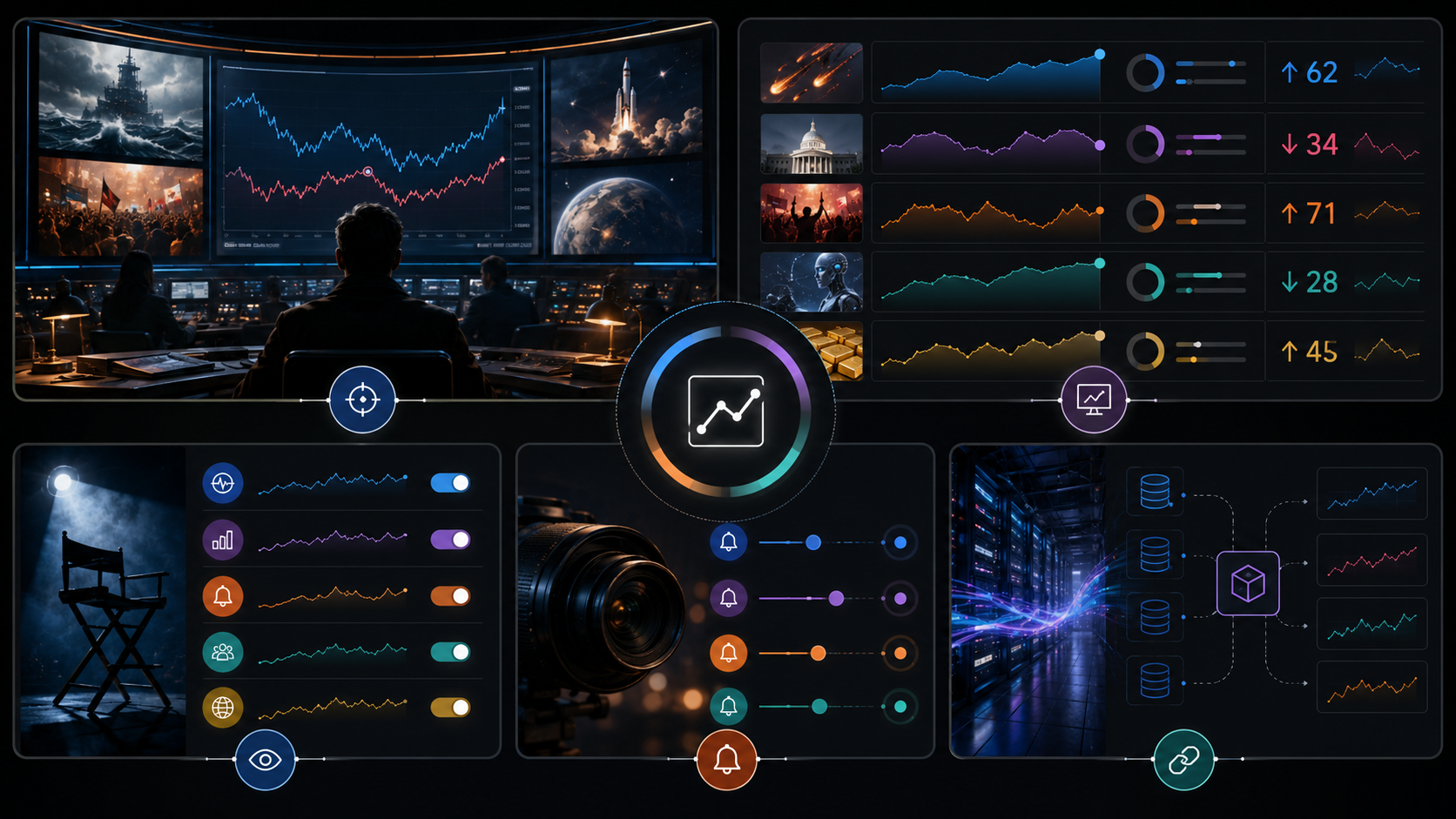
A practical tracker starts with a short list of markets, then watches price change, volume change, liquidity, time to resolution, and external catalysts. A long list is less useful because every small move starts to look important.
For ScreenOdds, a tracker page can support entertainment categories by showing when an Oscars, Netflix, reality TV, or box office market has moved enough to deserve a news update.
How to set alert thresholds
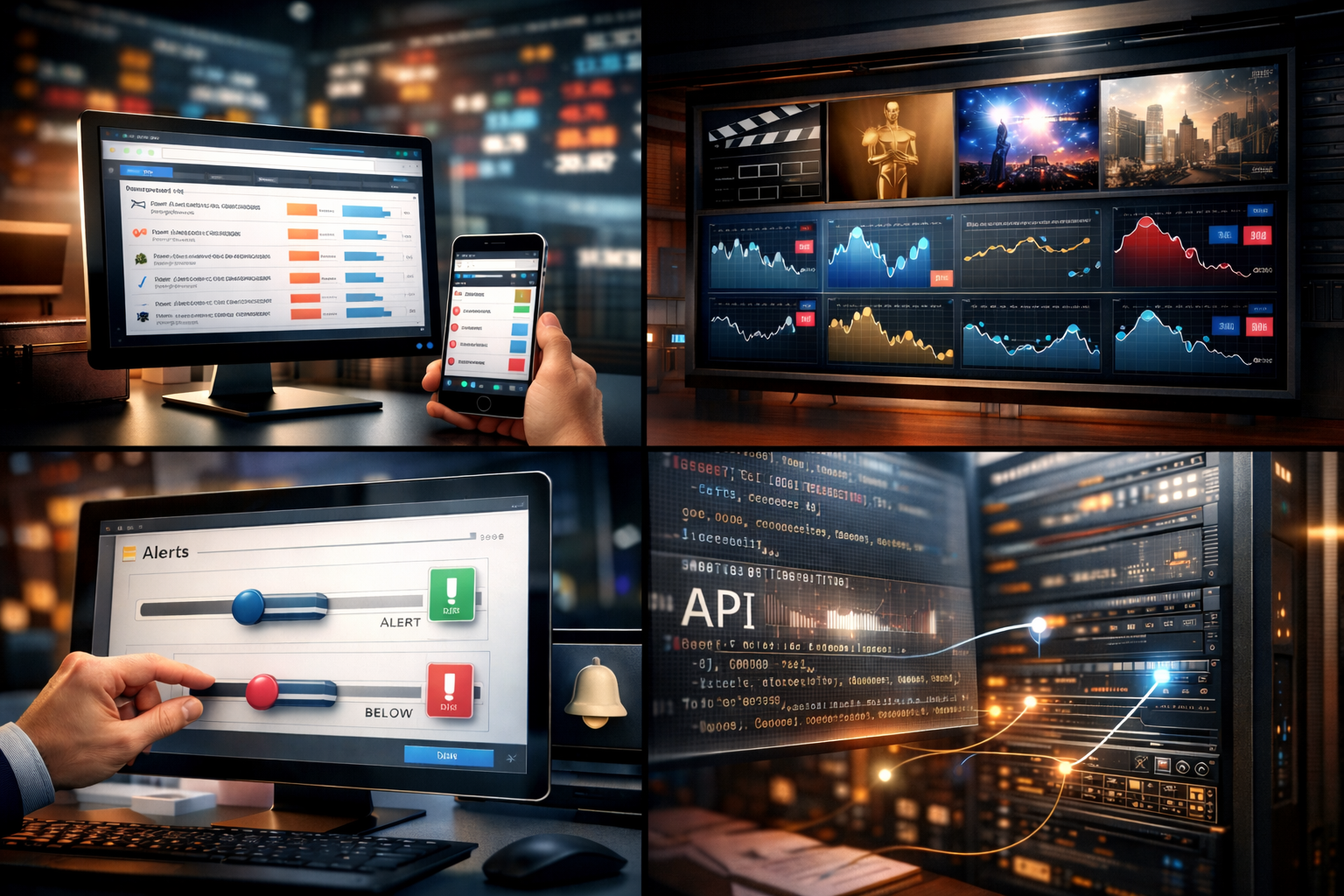
A one-cent move is usually noise unless the market is highly liquid or the timing is important. A better rule is to pair price movement with volume, liquidity, and a known catalyst.
For example, a five-point move after an official nominations announcement carries a different meaning from a five-point move in a thin market at 2 a.m. with no new public source.
Why APIs matter for tracking
Public APIs and documented market-data endpoints make trackers more reliable because they reduce manual checking. Kalshi's documentation shows how market data can be exposed through structured endpoints, and Polymarket's public event data gives ScreenOdds a fallback model for static market pages.
The site should always keep deterministic fallbacks so builds do not fail when an upstream endpoint is slow or unavailable.
How this page supports topical authority
Polymarket tracker is a tool-intent page. It should link up to Polymarket analytics and sideways to Polymarket volume because most tracking mistakes come from misreading thin volume.
It should also link down into entertainment examples. Readers learn faster when the abstract workflow is connected to Oscars, Netflix, Love Island, and box office markets.
Best use case for readers
Use a Polymarket tracker to avoid missing meaningful market movement. The goal is not to react to every tick; it is to create a repeatable process for deciding which moves deserve a deeper read.
ScreenOdds should treat tracker alerts as prompts for source checks, not as conclusions.
Sources
FAQ
What is a Polymarket tracker?
It is a watchlist or monitoring workflow for tracking market prices, volume, liquidity, timing, and catalysts.
What should trigger an alert?
A useful alert usually combines price movement with volume, liquidity, and a public catalyst rather than price movement alone.
How is a tracker different from analytics?
A tracker monitors markets over time, while analytics explains how to interpret the data when a market moves.